NZ’s $2.5 billion shoddy building bill: how to fix the ‘build now, fix later’ culture
- Written by The Conversation
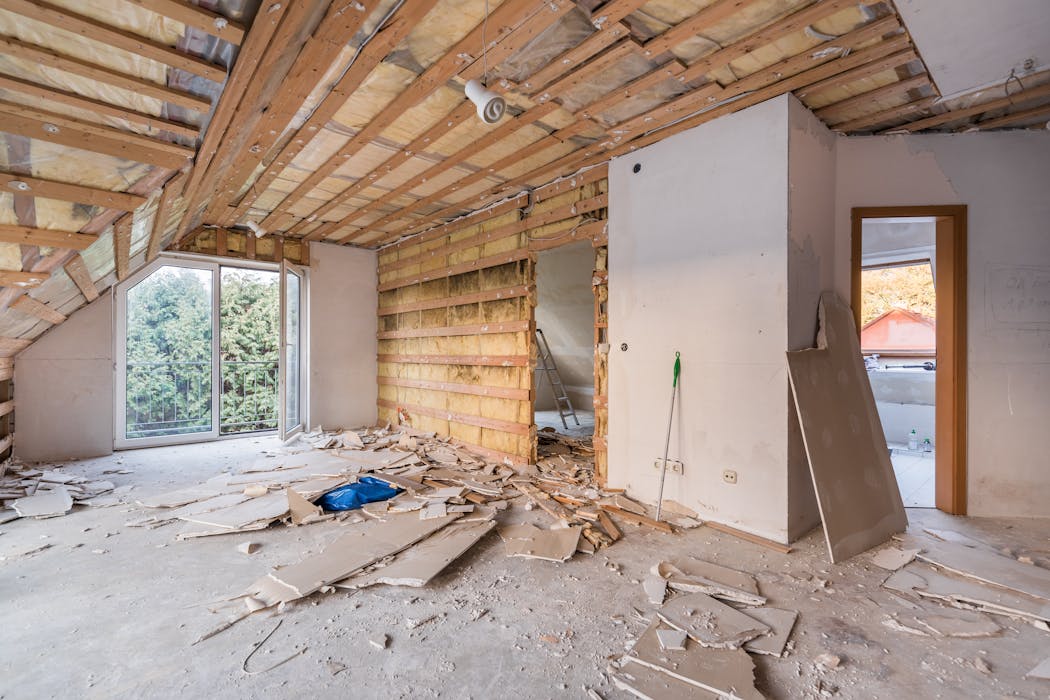
New Zealand’s residential construction industry contributes roughly NZ$26 billion annually to the economy and employs around 70,000 workers. Yet despite its significance and scale, the sector’s productivity levels have flatlined since the mid-1980s.
In housing construction, “productivity” isn’t a simple measure of output per worker; it refers to the industry’s ability to deliver the right quantity of high-quality homes without significant delays or flaws.
If a builder spends ten hours rectifying avoidable mistakes, for instance, their productivity for the day is effectively zero. And this has become all too common within the sector.
A 2014 study by the Building Research Association of New Zealand (BRANZ) confirms 92% of new houses surveyed had compliance defects.
Subsequent analysis carried out for BRANZ by the New Zealand Institute for Economic Research estimated the annual cost of defective building to the overall economy:
The results show that economy-wide effects of an increase in productivity would see New Zealand’s GDP rise by $2.5 billion, as the industry’s overall costs of production decrease.
That means nearly 10% of the sector’s total value is lost to systemic quality failure. Based on the average construction cost of an Auckland house, that loss represents around 5,000 missing homes every year.
Recognising the productivity problem, the government last year introduced major reforms aimed at speeding up consent processes and allocating financial liability for defective buildings to those responsible.
But while poor productivity is often blamed on procurement methods, technology or labour, our research suggests better quality management is key to remedying the industry’s “build now, fix later” culture.
Commercial viability before quality control
We surveyed the views of 106 residential construction professionals, including general managers, construction managers, site managers, project managers and subcontractors.
They were asked about the influence of quality management on improving residential construction productivity, and about the effects of government policy. The views expressed suggested a culture prioritising time and cost over quality is a systemic norm at the industry level.
We then traced the industry’s problems back to the major policy shifts that began in the mid-1980s. Before then, building quality was anchored in the prescriptive standards set by the Ministry of Works.
By specifying how to build, the ministry acted as a national governor of technical standards. But by 1988, those standards were viewed as a barrier to efficient market operation, effectively ending the era of the state as master builder.
The New Zealand Building Code subsequently replaced the previous prescriptive system with a performance-based model focused solely on outcomes.
Without strict procedural guidance, the industry moved towards a culture that prioritised speed and commercial viability over rigorous quality management.
A ‘tick-box’ culture
To understand why industry performance stalled, we refer to what’s called the “theory of constraints”, which argues a system is only as strong as its weakest link.
In New Zealand’s residential construction sector, we argue, the weakest link is not just poor quality control but the absence of a quality-focused culture in general.
The 1980s shift to a hands-off, self-regulated model helped foster a “tick-box” culture rather than genuine organisational reform. This has meant that with every step forward, the industry is pulled back by the need to fix previous errors, stalling productivity.
On the building site, this manifested as a disconnect between the “work as imagined” (the manuals and checklists from head office) and the “work as done” by builders and subcontractors.
The worst outcomes are well known. New Zealand is still paying for the nearly $47 billion legacy of the leaky homes crisis, which peaked in the early 2000s. Poor quality, damp and mouldy housing contributes to respiratory illnesses costing $145 million annually in hospitalisations.
While policies such as the healthy homes standards for rental properties now exist, such measures mainly treat the symptoms of a deeper problem.
In Auckland alone, one-third of all projects fail their final inspection. The high volume of remedial work required chokes the entire system’s throughput.
The government must lead
Fixing an annual $2.5 billion problem requires a structural shift. Our research proposes a framework where the state, as the primary funder and driver of major construction, sets the standard the rest of the industry must adopt.
The proposed framework is underpinned by “lean principles” designed to minimise waste and encourage continuous improvement through a “plan-do-check-act” cycle. It uses the ISO 9000 standards New Zealand already has in place for exports.
To help achieve this, we argue the government would need to do two things.
Establish a national construction, productivity and quality commission. This would be a nonpartisan body staffed by industry and academic experts to ensure reform survives beyond three-year election cycles.
Mandate quality management systems that align with existing ISO 9000 standards for all government-funded residential projects.
The aim is to create a trickle-down effect, driving culture change throughout the industry. To win stable government contracts, subcontractors would be forced to up-skill and formalise standards-based oversight of their work.
Improved quality and productivity should not be aspirational. New Zealand has 2.5 billion reasons to create the genuine structural reform required.
The author acknowledges the contributions of Senior Lecturer Funmilayo Ebun Rotimi and Associate Professor Nicola Naismith of AUT to the research described in this article.