Google Ads Agency Sydney: How to Generate More Qualified Leads With Paid Search
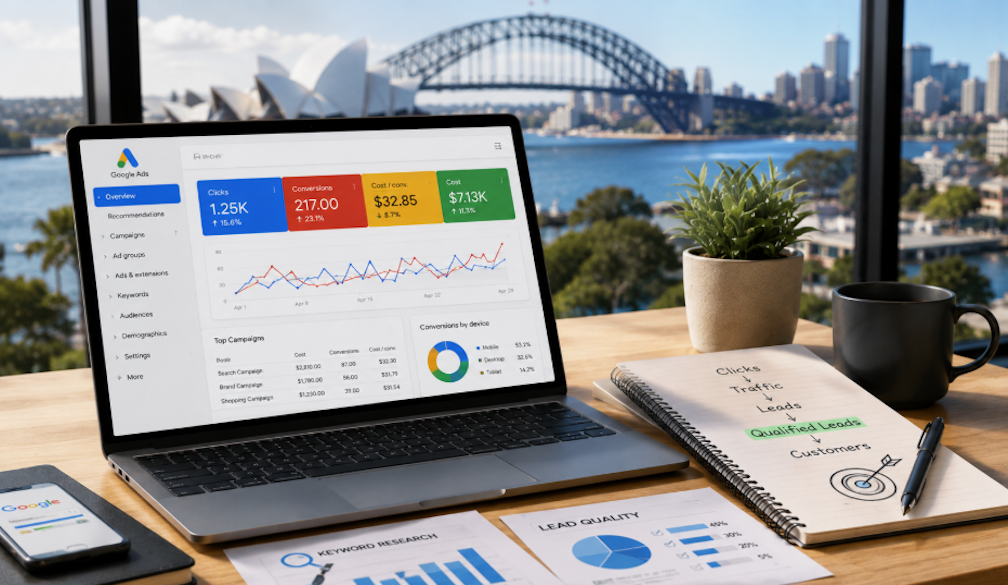
When someone searches Google for a service they need immediately, appearing at the right moment can be extremely valuable. Unlike many traditional marketing channels, paid search can place a business in front of people who are already researching a product or service. However, generating clicks is not the same as generating qualified leads.
A Google Ads Agency Sydney can help businesses build campaigns around search intent, relevant keywords, compelling advertising and measurable conversion goals. When these elements work together, paid search becomes more than a traffic source; it can become a structured lead-generation channel.
For Australian businesses considering Google Ads Services, understanding how paid search works and what separates a qualified lead from an ordinary website visitor is essential.
How Google Ads Can Generate Qualified Leads
Google Ads allows businesses to advertise when users search for relevant products, services or information. Instead of waiting for someone to discover a business organically, paid search provides an opportunity to reach potential customers at a specific point in their buying journey.
The key is targeting the right searches rather than simply trying to maximise traffic. Someone searching for "how to clean an air conditioner" may be looking for information, while someone searching for "air conditioner installation Sydney" could have a much stronger commercial intent.
A successful campaign therefore considers:
-
Search intent
-
Keyword relevance
-
Geographic location
-
Customer demographics where appropriate
-
Device usage
-
Time of day
-
Landing page experience
-
Conversion behaviour
-
Budget and bidding strategy
The objective should be to attract users who are most likely to take a meaningful action, such as submitting an enquiry, calling a business, requesting a quote or making a purchase.
Why Search Intent Matters More Than Click Volume
One of the biggest mistakes businesses can make with paid search is focusing too heavily on the number of clicks generated. High traffic may look impressive in a report, but it has limited commercial value if visitors have no intention of becoming customers.
Search intent helps advertisers understand what a user is trying to accomplish. High-intent searches often include words that indicate a user is looking for a provider, comparing options or preparing to purchase.
Examples of Different Search Intent
Consider a hypothetical plumbing business:
-
"How to fix a leaking tap" — informational
-
"Best plumber for leaking tap" — commercial investigation
-
"Emergency plumber Sydney" — strong service intent
-
"Plumber near me" — local and potentially high intent
These searches may require different campaign strategies. An experienced Google Ads Agency can segment keywords and campaigns according to intent rather than treating every search as equally valuable.
Building a Strong Keyword Strategy
Keyword research forms the foundation of a paid search campaign. The goal is not necessarily to target every phrase related to a business. Instead, advertisers should identify searches that align closely with the services offered and the type of customer they want to attract.
A campaign might divide keywords into groups based on specific services, locations or customer needs. This makes it easier to write ads that directly address the search and send users to relevant landing pages.
A useful keyword research process can include:
-
Identifying core services and products.
-
Researching commercial search terms.
-
Reviewing location-specific searches.
-
Analysing competitor advertising themes.
-
Identifying negative keywords.
-
Grouping related keywords by intent.
-
Reviewing actual search-term data after launch.
Negative keywords are particularly important because they can prevent advertisements from appearing for searches that are unlikely to produce valuable customers.
Writing Ads That Attract the Right Customers
A strong paid search advertisement needs to communicate relevance quickly. Users often scan search results rather than reading every word, so the messaging should clearly explain what the business offers and why the user should consider it.
Effective ad copy can highlight factors such as:
-
Specific services
-
Location
-
Relevant benefits
-
Experience
-
Availability
-
Service areas
-
Clear calls to action
For example, a business providing emergency electrical services may achieve better relevance with an advertisement specifically mentioning emergency electricians than with a generic advertisement about electrical services.
The goal is not to make exaggerated claims. Instead, advertisements should accurately represent what the business offers and set realistic expectations before the user reaches the website.
Landing Pages Are Just as Important as Advertisements
Getting someone to click an advertisement is only the first step. Once a visitor reaches the website, the landing page needs to make it easy for them to understand the offer and take the next step.
Sending every advertisement to the homepage can create unnecessary friction. A user searching for a specific service may expect to land on a page dedicated to that service rather than navigating through a general website.
Elements of an Effective Landing Page
A campaign landing page should generally include:
-
A clear headline
-
A direct explanation of the service
-
Relevant supporting information
-
Trust signals
-
Strong but natural calls to action
-
Easy-to-find contact details
-
Mobile-friendly design
-
Fast loading performance
-
Simple enquiry forms where appropriate
The landing page should also match the advertisement. If an ad promotes a particular service but the landing page discusses something completely different, users may leave quickly rather than converting.
Geographic Targeting for Sydney Businesses
For businesses serving specific areas, geographic targeting can help reduce wasted advertising spend. A company operating in Sydney does not necessarily need to advertise equally across every location in Australia.
Campaigns can be structured around service areas, suburbs, regions or broader metropolitan areas depending on the business model. However, geographic targeting should reflect where the company can realistically serve customers.
For example, a local trades business may want to focus on suburbs within its service radius, while an online retailer could target a much broader market.
Businesses should regularly review location performance to identify where enquiries and conversions are actually coming from.
Conversion Tracking: Measuring What Really Matters
Without reliable conversion tracking, it can be difficult to determine whether Google Ads is producing business results. Clicks and impressions show activity, but they do not necessarily show whether advertising is generating customers.
Conversion tracking can help businesses measure actions such as:
-
Phone calls
-
Contact form submissions
-
Quote requests
-
Purchases
-
Appointment bookings
-
Account registrations
-
Other valuable website actions
This information allows campaigns to be evaluated based on outcomes rather than traffic alone.
For example, Campaign A might generate 500 clicks and three enquiries, while Campaign B generates 150 clicks and 15 enquiries. Although Campaign A produces more traffic, Campaign B may be considerably more valuable to the business.
Optimising Campaigns After Launch
Launching a campaign is not the end of the process. Search behaviour changes, competitors adjust their advertising and some keywords will perform differently from others.
Ongoing optimisation involves analysing campaign data and making informed adjustments. Depending on performance, this might include changing bids, adjusting targeting, testing new ad messaging, refining landing pages or adding negative keywords.
A structured optimisation process may involve:
-
Reviewing search terms.
-
Identifying high-performing keywords.
-
Finding irrelevant searches.
-
Analysing conversion rates.
-
Comparing device performance.
-
Reviewing geographic results.
-
Testing ad variations.
-
Improving landing page performance.
-
Adjusting budgets according to results.
The purpose of optimisation is not to make changes simply for the sake of activity. Every adjustment should have a clear reason connected to campaign performance.
Understanding Cost Per Lead
Cost per lead is an important metric for businesses using paid search. It provides a basic indication of how much advertising spend is required to generate an enquiry.
However, the cheapest lead is not always the best lead. A campaign that generates inexpensive enquiries from people who are unlikely to purchase may be less profitable than a campaign producing fewer but higher-quality prospects.
Businesses should therefore consider both quantity and quality. Useful questions include:
-
Are leads relevant to the service?
-
Do prospects meet the target customer profile?
-
Are enquiries turning into sales?
-
Which campaigns produce the most valuable customers?
-
What is the average customer value?
-
Is advertising spend producing a sustainable return?
This broader view can help businesses make better decisions about budget allocation.
The Role of Ad Extensions and Additional Information
Paid search advertisements can include additional information that helps users understand a business before clicking. Depending on the campaign and available features, advertisers can highlight services, locations, offers, contact options and other relevant information.
These elements can make an advertisement more useful because users receive more context directly within the search results. They can also help businesses communicate their value proposition without relying entirely on the main headline.
The important principle is relevance. Additional information should support the user's decision rather than overwhelm them with unnecessary messaging.
Mobile Optimisation Cannot Be Ignored
A significant proportion of searches take place on mobile devices, particularly when users are looking for local services. Someone searching for an emergency service from a smartphone may want to call immediately rather than complete a lengthy form.
For this reason, paid search campaigns should be supported by mobile-friendly websites. Important contact information should be easy to find, forms should work correctly and pages should load efficiently.
Mobile optimisation should include both the advertisement experience and the destination page. A campaign can lose potential leads if the website is difficult to navigate on a small screen.
Common Google Ads Mistakes Businesses Should Avoid
Poor campaign structure can quickly consume an advertising budget without producing meaningful results. Some businesses launch campaigns without sufficient keyword research, conversion tracking or landing page preparation.
Common mistakes include:
-
Targeting overly broad keywords
-
Ignoring negative keywords
-
Sending every ad to the homepage
-
Failing to track conversions
-
Using generic ad copy
-
Targeting areas outside the service region
-
Making frequent changes without enough data
-
Measuring clicks instead of leads
-
Ignoring mobile users
-
Failing to follow up with leads promptly
Avoiding these issues can create a stronger foundation for paid search performance.
Choosing the Right Google Ads Agency
Businesses considering professional management should evaluate a Google Ads Agency based on its approach rather than promises of guaranteed results. Paid search performance depends on competition, budget, industry, offer, website quality, targeting and many other factors.
A prospective agency should be able to explain how it plans to research keywords, structure campaigns, track conversions, manage budgets and report results.
Before hiring an agency, consider asking:
-
How will you define a qualified lead?
-
What conversion actions will you track?
-
How will campaigns be structured?
-
How will negative keywords be managed?
-
What landing pages will be used?
-
How often will campaigns be reviewed?
-
What will monthly reporting include?
-
How will advertising performance connect to actual sales?
Transparency is particularly important when advertising budgets are involved. Businesses should understand what work is being performed and how campaign decisions are being made.
Balancing Google Ads With Organic SEO
Paid search and SEO can work together rather than competing for the same purpose. Google Ads can provide immediate visibility for selected searches, while SEO focuses on building organic visibility over time.
Data from paid campaigns can also provide useful insights into customer behaviour. High-converting search terms may reveal topics or services that deserve greater attention in the website's organic strategy.
Similarly, strong organic pages can sometimes provide useful landing page opportunities for paid campaigns. Combining both channels can create a more comprehensive search marketing strategy.
How Indi Creative Can Support Paid Search
Indi Creative can be considered by Australian businesses looking for digital marketing and Google Ads Services. When evaluating any provider, businesses should look for a transparent process that connects campaign management with measurable commercial objectives rather than focusing solely on impressions or clicks.
The right approach should account for the business's target audience, service area, competition, budget, website and lead-handling process. Paid search works best when advertising, landing pages, tracking and sales follow-up are treated as connected parts of the customer journey.
Conclusion
A Google Ads Agency Sydney can help businesses turn paid search into a more structured lead-generation channel by focusing on search intent, relevant keywords, targeted campaigns, compelling advertisements, effective landing pages and accurate conversion tracking.
For businesses investing in Google Ads Services, the goal should not simply be to generate more clicks. The real opportunity is to attract people who have a genuine need for the product or service and guide them toward a meaningful action. With ongoing testing, measurement and optimisation, paid search can become a valuable component of a broader digital marketing strategy for businesses competing in Sydney and across Australia.