Why Does My Safety Switch Keep Tripping? What to Check Before You Call Someone
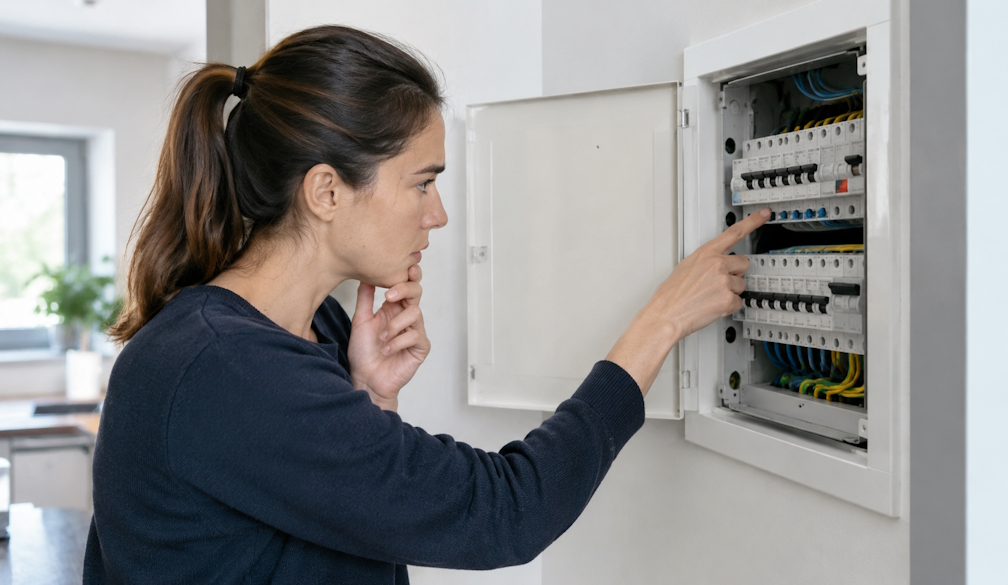
The power goes off in half the house. You head to the switchboard, find the safety switch has dropped, push it back up, and everything comes back on. Ten minutes later, it trips again.
A safety switch that keeps tripping is frustrating, but it is also doing exactly what it was designed to do. Somewhere in the house, electricity is going where it should not. The goal is to find out where, safely.
What a safety switch is actually doing
A safety switch, also called a residual current device or RCD, constantly compares the electricity flowing out along a circuit with the electricity flowing back. If the two do not match, some current is leaking somewhere, possibly through water, damaged insulation or a person. The switch cuts the power in a fraction of a second.
That is different from a circuit breaker, which trips when a circuit is overloaded or short-circuited. Before you start investigating, check which device has tripped. Safety switches usually have a test button marked "T" or "Test".
The most common causes
In most homes, repeated safety switch trips come down to a handful of causes. The most common is a faulty appliance. Kettles, toasters, fridges, washing machines, dishwashers and heaters all develop small faults with age, particularly where water and heat meet inside the appliance.
Moisture is the next big one. Outdoor power points with cracked covers, garden lights, pool pumps and cables running through damp areas can all leak current once water gets in. That is why so many safety switches trip during or after heavy rain.
Damaged wiring is less common but more serious. A nail through a cable during renovations, or rodents chewing insulation in the roof space, can create a fault that sits quietly for months. Heating elements in ovens and hot water systems can also wear and start leaking current to earth.
Sometimes there is no single culprit. Several appliances on one circuit can each leak a tiny amount of current, and together it adds up to enough to trip the switch.
The pattern of the tripping is often the biggest clue.
A step-by-step check you can do safely
Start by turning off and unplugging everything on the affected circuits. If you are not sure which circuits are involved, unplug everything you reasonably can.
Next, reset the safety switch. If it trips immediately with nothing plugged in, stop there. The fault is in the fixed wiring or a hardwired appliance, and it needs a professional.
If the switch holds, plug appliances back in one at a time, switching each one on and waiting a minute or two before moving to the next. When the switch trips again, the last appliance you connected is the prime suspect. Leave it unplugged and have it checked or replaced.
Some appliances cannot be unplugged, such as ovens, hot water systems, ceiling fans and lights. Switching off individual circuit breakers on the board, one at a time, can help narrow down which circuit the fault is on.
Patterns that point to the cause
Pay attention to when the tripping happens. If it only trips at night, the usual suspects are a fridge running its defrost cycle or an off-peak hot water system switching on. If it trips after rain, look outside first, at power points, lights and any cables exposed to the weather.
If it trips every time one particular appliance is used, that appliance is very likely faulty. If there is no pattern at all and the trips seem random, an intermittent wiring fault becomes more likely.
Writing down the date, time and weather each time it trips can save an electrician a lot of investigation.
What not to do
Do not keep resetting a safety switch over and over in the hope it will stay on. Never tape it in the on position or try to bypass it. Do not open up power points or switches to look for the problem, and do not keep using an appliance that has sparked, smells hot or has been exposed to water.
The safety switch is the device protecting your household from electric shock. Working around it removes that protection entirely.
When it is time for fault finding
Some situations call for a professional straight away. A burning smell or a discoloured, warm power point should never be investigated by hand. Tripping that happens after every downpour, with no obvious outdoor cause, usually means water is reaching wiring somewhere you cannot see.
Older homes can have a different problem. A switchboard with a single safety switch covering every power circuit will trip far more often, because every small leak in the house adds up on that one device. The same applies when the fault seems linked to the oven, the hot water system or another hardwired appliance.
If the switch still trips with every appliance unplugged, the problem is in the wiring, and that is a job for someone who handles electrical repairs around Newcastle rather than another round of resetting. Proper fault finding involves isolating circuits and testing the insulation of the wiring to locate where current is leaking.
Test your safety switches regularly
Safety switches are mechanical devices and can wear over time. Pressing the test button every few months is a simple habit. The switch should trip straight away. Reset it and check the power is back on.
If a safety switch does not trip when you press the test button, have it checked. A safety switch that will not trip on test may not trip when it really matters.
Tripping is a message, not a malfunction
It is tempting to see a tripping safety switch as the problem. Usually it is the solution, warning you about a fault elsewhere. A methodical check will often find a faulty kettle or a damp outdoor power point. When it does not, that is the point to bring in someone with the right equipment to find what the eye cannot see.