Why Port Adelaide Homes Often Need Different Plumbing Solutions Than Newer Properties
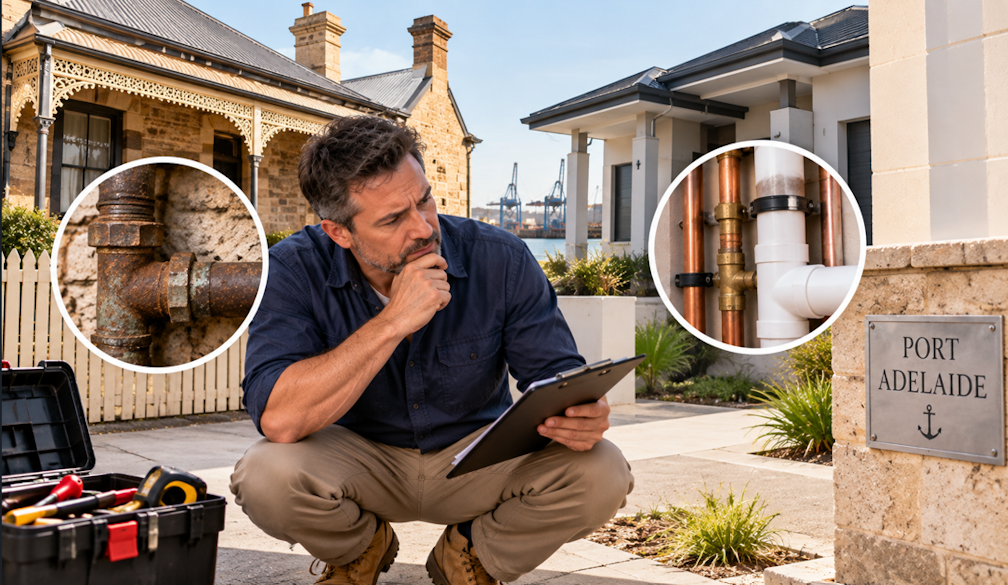
Port Adelaide is not one kind of housing. The area includes older cottages and established homes, renovated properties, commercial buildings, apartments and newer infill. That mix is exactly why plumbing problems should not be diagnosed from the age of the bathroom tiles or the look of the kitchen.
A property can have modern taps and a recently renovated ensuite while the main drain beyond the new work is decades older. Another home may have had its underground services renewed during redevelopment. Two neighbouring addresses can therefore experience completely different faults even when the houses look similar from the street.
A plumber Port Adelaide property owners call for a recurring issue needs to understand which parts of the plumbing belong to which era. The solution depends less on whether the suburb is "old" and more on what remains under that particular block.
The visible renovation may stop well before the main drain
Bathrooms and kitchens are the parts of plumbing people see, so they are usually the first areas renovated. New fixtures, copper or plastic water lines and fresh PVC wastes can create the impression that the home's plumbing has been modernised from end to end.
Often, the new branch connects into an older underground drain outside the renovated area. If that original line is sound, there may be no problem at all. If it has cracked joints, root intrusion, movement or poor fall, the new bathroom can still inherit the old drain's limitations.
This is why a blockage that starts after renovation is not automatically proof that the new work was done badly. The change in use may simply expose an existing weakness downstream. An extra bathroom can add simultaneous flow to a line that had been coping only because demand was lower.
Older drainage materials fail differently from modern PVC
Many established Australian properties were built with earthenware or clay drainage. These pipes can remain serviceable for a long time, but they were installed in shorter sections with numerous joints.
Over time, ground movement can shift a joint or create a small lip inside the pipe. A crack can allow moisture to escape and roots to enter. Once roots establish, they catch paper and waste, creating recurring blockages.
Modern PVC usually has longer, smoother runs and fewer joints, but it is not immune to trouble. Poor support can allow a section to sag. Construction debris can remain in a line. Landscaping or later excavation can damage a buried pipe.
The repair method therefore depends on condition, not simply material. An older clay line with one isolated defect may need a targeted repair. A structurally suitable section might be considered for relining. A modern line with heavy buildup may only need proper cleaning.
Water pressure problems can come from the property's internal plumbing
Older properties sometimes contain layers of water-supply alterations. A section of older metal pipe may connect to newer materials, valves may have been added during renovations, and pipe sizes can change across the building.
If water pressure is poor at one outlet, the cause might be a local aerator, mixer or isolation valve. If several outlets are affected, the investigation broadens to the incoming supply, pressure-control devices and internal pipe condition.
Ageing galvanised pipework, where still present, can corrode internally and reduce the available opening. The outside of a pipe may look intact while the inside has become heavily restricted.
Replacing a tap will not solve that kind of pressure problem. A plumber needs to work out where the restriction begins before recommending upgrades.
Renovations can create difficult access even when the plumbing itself is sound
A drain that once ran through open soil may now sit beneath a paved courtyard, extension, driveway or finished floor. That changes how repairs are planned.
Before assuming a blockage will require large-scale excavation, plumbers can use CCTV cameras and locating equipment to identify where the defect actually sits. A problem several metres away from the visible symptom may be accessible from a side path or inspection point.
Knowing the exact position also matters when deciding between excavation and less invasive repair methods. Pipe relining can be useful for some structurally suitable damaged drains, but it is not appropriate for every problem. A collapsed line, major displacement or severe loss of shape can still require excavation.
The less guesswork involved, the easier it is to avoid opening the wrong area of an established property.
Older homes often have mature trees and mature roots
Established gardens are part of the appeal of many older areas, but large trees and old drains can be a difficult combination.
Roots do not simply attack any pipe nearby. They exploit openings where moisture is available. A sound, sealed drain can sit near a tree without root intrusion, while a cracked joint further away can become a reliable water source for roots.
If roots are removed from the same drain every year, the important question is whether the entry point has been identified. Repeated cutting restores flow but does not repair the opening.
For recurring blockages, camera footage can show whether the problem is concentrated at one joint or spread across a longer section. That evidence helps determine whether local repair, relining or replacement makes more sense.
Stormwater also deserves a property-by-property assessment
Older properties may have undergone several changes to roofs, paving, sheds and landscaping. Each alteration changes where rain lands and how quickly it runs off.
A yard that once absorbed water can become mostly hard surface. A downpipe may have been redirected during an extension. A ground grate can end up lower than surrounding paving and receive far more runoff than it was originally intended to handle.
When ponding occurs, do not assume the street system is the only cause. The private stormwater route should be traced from roof and surface inlets to the approved discharge point. Blockages, damaged pipes, poor surface falls and public drainage conditions can produce similar visible puddles but require different responses.
Property history is often more useful than property age
When a plumber Port Adelaide homeowner engages arrives, previous information can shorten the investigation. Old invoices, renovation plans, drainage camera footage and knowledge of past blockages all help show what has already been changed.
If you are buying an established property, ask what plumbing and drainage work formed part of earlier renovations. A beautifully updated bathroom does not confirm that underground drains were included.
If you already live in the home, notice patterns. Does the drain block at the same time each year? Did pressure change after a renovation? Does one stormwater pit overflow before the others? Did trouble begin after new paving or tree growth?
Port Adelaide's variety is exactly why generic assumptions do not work well. Older properties are not automatically unreliable, and newer plumbing is not automatically problem-free. The practical approach is to identify the materials, routes and alterations at the individual address, then match the repair to what is actually there.